Sparks From Flint & Steel: What We Learned From Two Passionate Idaho Entrepreneurs
Lessons from Argali’s Brad Brooks and Exo Mtn Gear’s Steve Speck
Courtney McGuane · November 10, 2026
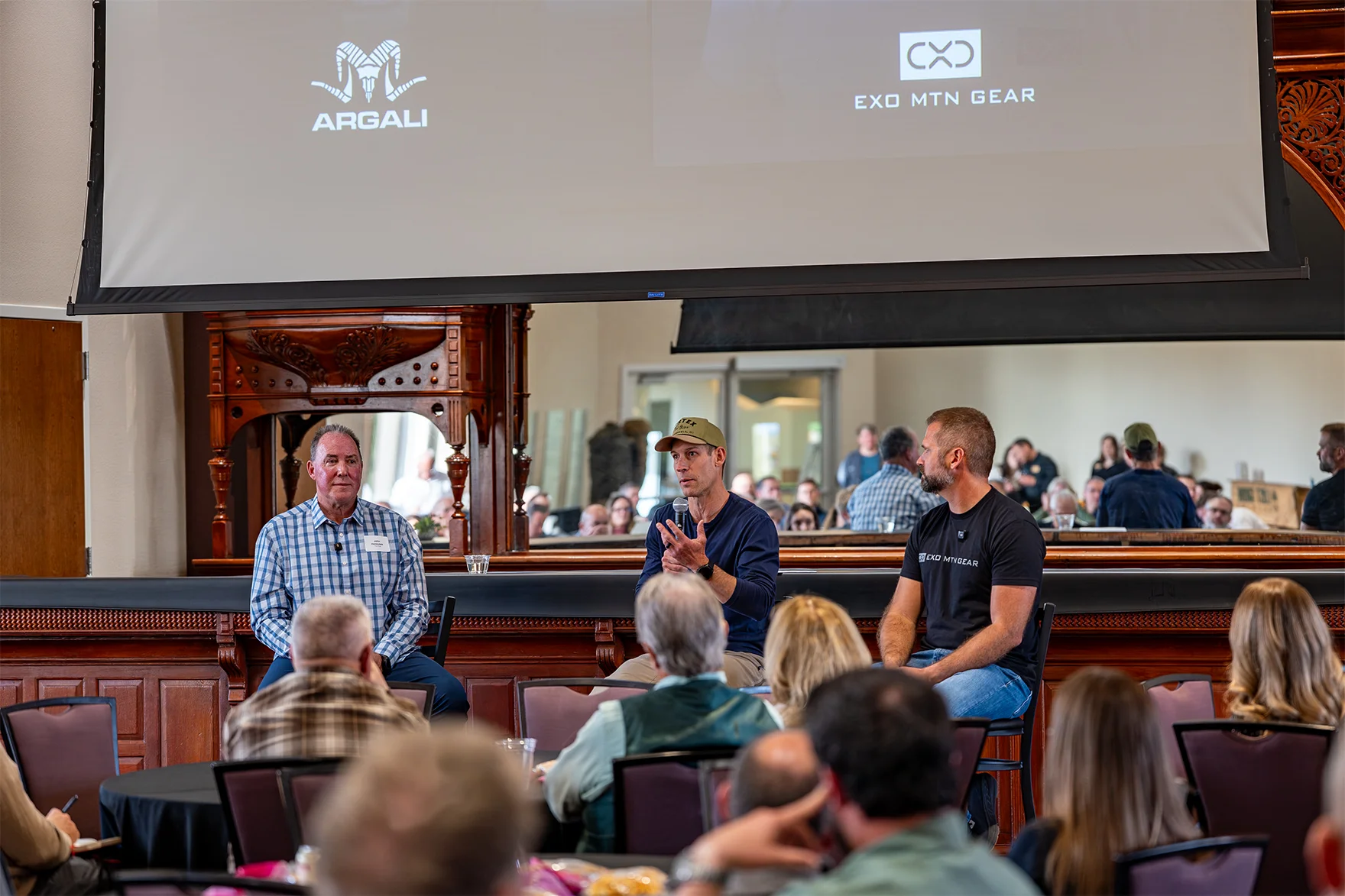
Argali’s Brad Brooks and Exo Mtn Gear’s Steve Speck built two of Idaho’s most respected outdoor gear companies with no outside money and no easy path. At Fusion’s Flint & Steel: The Long Hunt, they shared what it actually took. Here are our five takeaways.
Just a few miles apart from each other, two regular guys who’d never met but happened to both go to Meridian high school, started two of the most respected backcountry hunting brands in the country: Brad Brooks of Argali, and Steve Speck of Exo Mtn Gear.
At the Fall 2026 session of Flint & Steel, moderated by John “Hak” Hanousek, the two founders shared how their products came about, what went wrong along the way, and what their advice would be to anybody who’s thinking about building a successful company.
Why hunting gear? Simple, both Brad and Steve love to hunt and weren’t impressed with some of the gear they used and came across in the industry. If you can’t find what you’re looking for, build it yourself.
Frustration Fuels Design
Both founders initially built their products because something they were using let them down. As Brad put it, “I get really frustrated with the way something is functioning. And then I was like, I’m going to make my own,”.
Brad’s first product with Argali was a game bag, a bag that hunter’s use to keep meat clean and out of the elements. He tore a hole in the one he’d been using, went home, drew up a better one and figured out how to manufacture it. The first batch sold out in two weeks.
Argali’s eight-person tent started out in a similar way. On a backcountry hunt, Brad’s tent sagged so badly it hardly fit three people. He drew a new design in the dirt and took a photo to take home.
Steve’s story is a bit different in that it’s about a gap in the industry rather than a flaw. In 2012, a pack for a multi-day backcountry hunting trip didn’t exist. Hunting packs were built for day trips, and comfortable backpacking packs weren’t designed to hold the amount of weight of say, a deer. “The product category didn’t exist,” Steve said, so he created it.
Trust Over Transactions
Brad and Steve both built an audience online before building a product line, and in both cases, it wasn’t on purpose. They each started out by making hunting films because the hunting TV of the day was, as Brad put it, “unrelatable,” and about “wealthy guys” on private ranches and featured too many kill shots.
After Brad’s second film, he started getting questions from his viewers about his gear. What was it? Where did he get it? How did he like it? That led to an online shop that sold only products that he personally used and stood behind.
The store’s first day brought zero visitors. The first year brought 254 orders, and Brad’s realization that he hated being in retail. Making a sharp pivot, he shut down the store and it’s successful SEO marketing and decided on only selling his own unique designs. With just two game bags and a knife, Argali made more money the next year than it had selling other companies’ products.
Trust is the bedrock of Exo Mountain Gear’s business, and it shows up in the numbers. The company spends close to nothing on marketing, and ‘a friend’ is the top answer on its how-did-you-hear-about-us checkout question. As Steve has said, “44% of our sales are friend referrals…we treat them well, the pack performs well, he tells his buddy. And then that just snowballs,”.
A Person of Action
During the Q&A session, an audience member posed the question of how to start a business without any money. Brad didn’t sugar coat, “Work all the time. Work weekends, you work nights and you work mornings,” and Steve also knows what that's like. Early on, Steve worked 80 to 90 hours a week, for years.
With no money, comes a lot of imagination and self-teaching moments. With no budget available, Steve taught himself photography, and video editing. In Brad’s case his biggest money obstacle was minimum order quantities on fabric and manufacturing. He couldn’t afford them, so he told the suppliers directly, sold them on his vision, and negotiated for smaller batches.
Persistence is just as important. Figuring out the process of how to manufacture a tent took Brad nearly two years.
And ideas alone aren’t anything without follow through.
When someone pitches Brad a business idea, he listens and then asks one question, “So what are you going to do about it?”
Believe in Your Product
Exo backs their packs with a lifetime warranty, and that promise got tested in 2019. Their K3 pack had used a new high-tech aluminum frame. While the numerous prototypes the testers used had zero issues, within weeks of production starting, the frames started cracking.
Exo replaced every single frame it had shipped with titanium, a $200,000 decision for what was a small company. Steve’s reasoning is still what leads his business, “Everything is based on how does it impact the company in five years from now, ten years from now, not what’s most profitable for the next six months,” For the next three years Steve refined the K4, and his standard was perfection.
Build a Happy Business
The relationship begins at checkout. Every Exo buyer gets a series of weekly emails on how to fit their new pack, load it, and carry meat on it. As Steve said, the whole strategy boils down to two things: make the best product possible and take care of your customers.
Steve doesn’t focus on what others in the industry are doing around him, instead his focus lands squarely on making a great product. His passion and design are what drives the company forward, that, and of course the customers.
Brad said the same about Argali. Trust and authenticity come first, and the customer experience after someone buys his products is, in his own words, “incredibly important.”
Say No to Distractions
Both run small, focused teams, and they keep them that way on purpose. Exo has just nine people internally, and Steve deliberately doesn’t want that number to grow. As he explains, he’s seen too many brands scale up, take on investors and lose the soul of their company.
The people are everything. When a great vendor contact moves to a new company, Steve follows them there. His advice is simple, “People are your company. If you have good people working for you, just take care of them, keep them around.”
Brad approaches hiring with a similar mindset. He looks for people who add something he can’t. He also warns against what he called “shiny object syndrome,” the trap of chasing whatever the competition is doing instead of focusing on your own work.
Built Here
Both founders kept emphasizing two points: hard work pays off and stay close to the people who use your gear. Argali and Exo Mountain Gear started here in Idaho, build here and hire here. When companies like this grow, our entire community benefits.
As with every Flint & Steel, Fusion donated to causes chosen by the speakers: Backcountry Hunters & Anglers (Brad’s donation choice) and Idaho Youth Ranch (Steve’s donation of choice) each received $1,000. A final thanks to Brad Brooks and Steve Speck for an honest look inside their companies.
Our 5 Key Takeaways
1. Build Trust, Before You Build a Product
Argali and Exo Mountain Gear had loyal audiences before full product lines, and that trust became the foundation for everything that followed. A strong brand story keeps customers coming back.
2. Disadvantages Have Their Advantages
Having no money and a small team might sound like disadvantages to some people, but both founders turned them into strengths. Staying small keeps you close to your core audience and lets you make decisions quickly.
3. There’s No Easy Way
Brad spent years figuring out how to manufacture his tent, and Steve worked 90 hours a week for years. Ideas don’t count for much when you never act on them.
4. Customers First
Real-world testing, quick turnaround times and customer education all build confidence in what you sell. When Exo’s K3 frames failed, they honored the lifetime warranty with a $200,000 fix rather than cutting corners. Great products create sales, and taking care of customers earns you loyalty.
5. Stay True to Yourself, and Your Team
Don’t try to replicate what someone else is doing. Understand your why, avoid ‘shiny object syndrome’, and stay on the path you built for yourself. Surround yourself with talented people who add what you can’t, then take care of them so they stick around.
Missed the last session? Read our recap of Flint & Steel: Generational Leadership and the Future of Work.
Ready to talk strategy?
Let's Connect